Counting true material cost, including waste and packaging
When you lay out your costs for a handmade item, start with every material you use. This is more than the wood, yarn, or clay that becomes your finished piece. Include adhesives, finishes, thread, fasteners, and any supplies that get consumed in production. If you buy your materials in bulk, break down the price to a per-piece basis. For example, if a spool of wire costs twenty dollars and makes forty pendants, each pendant carries fifty cents of wire.
Material waste is real. Every batch has scraps, miscuts, or failed pieces. Track these losses for a few events. If you lose ten percent of your fabric to trimming, that ten percent belongs in your cost calculation. Many makers forget to add the cost of test runs, prototypes, and samples. Over time, these all draw from your material inventory.
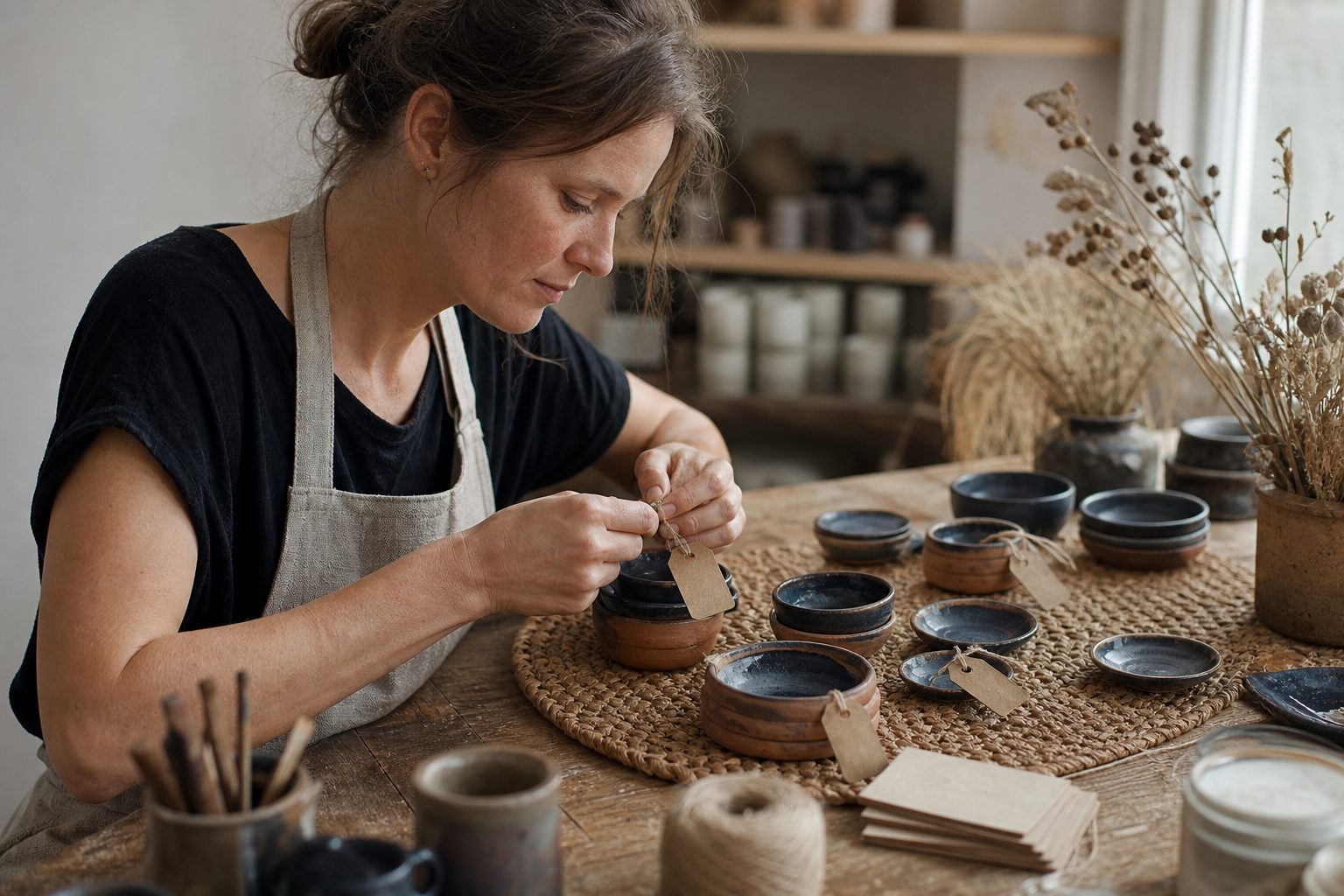
Packaging is easy to overlook. Price out your bags, boxes, tissue paper, and tags. If you handwrite a thank you card for each sale, count the cost of cards and ink. For shipping-heavy shows or online orders, add protective packing and postage. At the end of this step, you should know the full out-of-pocket supply cost for every finished item, not just the headline materials.
Keep reading: Show Week Checklist: Permits, Insurance, Weights, and Float
Timing your build and setting an hourly rate you can defend
The next step is labor. Your own time is a real cost, even if you do not pay yourself a paycheck. Track how long it takes to make each piece, from setup to final clean-up. If you batch-process, divide total hours by the number of finished items. Factor in design, finishing, and any time spent on rework. Keep a notepad or timer handy for a week to get real numbers, not guesses.
Setting your hourly rate should balance skill, experience, and the market. Look at what skilled trades in your area earn per hour. If you want to pay yourself for fifteen hours of work a week, and you need to cover household expenses, work backward from that goal. For example, if you need to earn three hundred dollars per week from your craft and plan fifteen hours of work, your rate is twenty dollars per hour before taxes and expenses. Many makers undervalue their hands-on time, but this is what keeps you in business.
Defend your rate by comparing to others in your field. If you have specialized skills or certifications, you can justify a higher rate. A reasonable hourly rate also helps if you ever hire help or outsource parts of your process. Buyers may not see the hours you invest, but your price needs to honor them.
Loading overhead: booth fees, tools, studio rent, insurance
Overhead includes every cost that keeps your operation running, beyond direct materials and labor. Booth fees are often the largest single cost for a show. These can range from small local markets to larger juried fairs. Add in application fees, parking, and electricity if you use lights or equipment. Some events require insurance or extra permits, so include those when they come up.
Your tools and workspace matter, too. If you rent a studio, divide the monthly rent by estimated pieces made per month. If you work from home, include a portion of utilities or storage costs. Tools wear out and need replacement. Estimate the annual cost of tools and spread it over your product line. A new sewing machine every three years, divided by total items sewn, is a real cost per piece.
Do not forget insurance. Product liability and general business insurance can protect you from claims. Some shows demand proof of coverage. Take the total cost per year and break it down to a per-event or per-piece basis, so it is embedded in your pricing structure.
Keep reading: Juried Art Festivals vs Open Craft Fairs vs Holiday Markets
Keystone, wholesale, and why retail has to sit above both
"Keystone" refers to doubling your wholesale price to reach a retail price. This is standard in much of retail and crafts. If you hope to sell wholesale in the future, your price must have enough margin to cover a fifty percent discount. For example, if your costs come to fifteen dollars per item, and you want to wholesale at thirty dollars, your retail price should be around sixty dollars.
If you price only for direct sales, you may box yourself out of gallery placements, shop consignment, or wholesale orders later. Build in the margin now, even if you do not sell wholesale yet. If a retailer approaches you, you will have a price you can stand by. This also keeps your pricing consistent across venues and prevents undercutting your own stockists.
Retail customers may balk at higher prices, but the true cost of handmade work includes every step and every dollar spent. Makers who skip the keystone step often find themselves losing money or unable to scale.
Price points that match how shoppers carry cash and cards
Craft fair shoppers come with a mental budget. Many carry cash in twenties or fifties, while others use cards for larger buys. Watch how people pay at your booth and how much they spend without hesitation. Small impulse items often sell best at price points just under a round bill, like nineteen dollars or forty-nine dollars. This lets buyers hand over a twenty or fifty and feel comfortable.
For higher-priced work, make sure you accept cards. Most buyers do not carry two hundred dollars in cash. If your items run over a hundred dollars, a mobile reader or app is essential. Some shoppers will walk away if you are cash only, especially for larger items.
Place a few items at "giftable" prices. Many buyers come looking for teacher gifts, hostess gifts, or souvenirs. These sell well at ten to thirty dollars. Larger showpieces may sit longer, but anchor your booth and attract attention. Watch your sales patterns and adjust your mix to match local buying habits.
See how BoothInventory handles this for craft and maker commerce
Building a good, better, best ladder inside one booth
A price ladder offers buyers options at several levels. Think of it as "good, better, best." The entry-level item draws in the casual shopper. A mid-range option gives buyers a step up in size, detail, or uniqueness. The top-tier piece is your showstopper: the most complex or impressive item you sell.
For example, a ceramic artist might offer simple mugs at twenty dollars, larger serving bowls at fifty, and decorative platters at one hundred fifty. This lets shoppers self-select based on their budget. Some will start with a small item and return for a larger one later. Others might buy the best piece as a gift or special occasion purchase.
A tiered approach helps you move inventory and makes your booth feel accessible. It also lets you experiment: if your mid-range pieces fly off the table, you can adjust production. If your best pieces rarely sell, but draw crowds, they still earn their keep by building your reputation and drawing in traffic.
Raising prices mid season without confusing repeat buyers
Sometimes your costs rise or you realize your prices are too low. Raising prices mid season is tricky when you have loyal customers or regular show appearances. The key is clarity and consistency. Make the change across all items and all events at the same time. Avoid "show-only" specials that make buyers second-guess your regular prices.
Offer a heads-up to repeat buyers if you have a mailing list or social media. A short announcement, "Due to rising material costs, prices will increase next month", sets expectations. If a customer asks, explain simply: your costs have gone up, and you want to keep quality high. Most buyers respect honest, direct answers.
Keep past sales records. If a shopper points out a previous lower price, thank them for their support and note the change was needed to keep your work sustainable. Resist the urge to apologize for the value of your craft. Over time, your pricing should match the true cost of your work, not just what you think will sell fastest.
Tracking all of these moving parts, materials, labor, overhead, price tiers, and event sales, takes time and attention. Many makers use spreadsheets, notebooks, or specialized tools that handle event-by-event tracking, restock lists, and profitability comparisons. A system that brings your inventory and sales data together makes it easier to price confidently and adjust as your business grows.