For makers who sell at fairs

See what sold at every market, what to make next, and which shows earn their fee.

BoothInventory rides in your apron pocket at the table and opens on the laptop at the studio bench. Count in at load in, count out at load out, and the whole show adds itself up while you are still folding the linens.

  • 1,247 makersRunning their season on BoothInventory across 43 states
  • 3,180 showsCounted in and counted out since the first market in 2023
  • 22 minutesMedian time from first login to a priced booth list
A maker arranging handmade ceramic bowls and folded woven textiles on a craft fair booth table under a white canopy
Show sheet $1,412 net Booth fee $325, 41 pieces sold

What the bins never tell you

You packed the truck by feel, and the numbers went home in your head.

Every maker who works a circuit knows the two conversations on the drive home. The first is about which table neighbor had the good coffee. The second is the one nobody wants: did that show actually pay, and what do I have left in the bins.

The bin nobody counted

You load six totes at 5 a.m. and unload five and a half at nine that night. Somewhere between the tent and the truck the count became a guess, and the guess follows you into the next show.

One miscounted run of 40 stud earrings is roughly $560 of finished stock you cannot find.

The show you keep doing out of habit

It was good in 2022, so it stays on the calendar. Nobody adds the jury fee, the booth fee, two tanks of gas, a motel night and eleven hours behind the wheel before deciding it was good again.

A $425 booth plus 9 hours of drive time can net less than a quiet Saturday at the bench.

The restock list on the back of a receipt

The small planters go by eleven on Saturday. You tell yourself you will remember. By Tuesday you are wedging clay for the wrong thing and the same shelf empties again at the next market.

Selling out of one fast line before noon leaves about $310 sitting on the table.

March, and a shoebox of statements

Fourteen markets, three card readers, cash in a zip pouch and a fee schedule for four different counties. Rebuilding a season from bank exports is the least creative week of the year.

Makers we surveyed spend 6 to 9 hours reconstructing one season for their tax preparer.

Four passes, one show

Counting a market is four small habits, not a second job.

The whole method fits between two cups of coffee. Nothing here asks you to price differently, sell differently or stop talking to the person at your table.

  1. Build the booth list once

    Enter your lines the way you actually make them: form, glaze, colorway, size run. Each one carries a price, a material cost and a batch size. You do this once, in the studio, and it carries into every show for the rest of the year.

  2. Count in while you set up

    As the risers go on the table, tap the count for each line. Two people can count the same booth from two phones and the totals merge by line item. It takes about four minutes for a hundred piece booth, and it works with the signal off.

  3. Sell the way you already sell

    Tap sales as they happen, or leave the phone in the apron and import the card reader batch after the show. Cash, card, trade with the booth across the aisle and custom orders all land in the same show record with the right price attached.

  4. Count out and close the show

    At load out you count what is going home. The difference is your sold list, checked against the money you took. Booth fee, mileage, lodging and helper pay go in the same screen, and the show scorecard is finished before the tent is folded.

Handmade pottery and woven textiles displayed on wooden risers over a linen cloth at a craft fair booth
Load out 41 sold 62 back in the totes, list ready

Built for the tent, not the warehouse

Six things it does that a spreadsheet in the truck will never do.

Booth manifest and load in count

Pack against a list built from your own product lines, with a printable manifest for the tote lids. The count you tap at setup becomes the opening number for the show, so nothing depends on remembering.

Sales at the table, signal or not

Tap a sale in two seconds while you are wrapping tissue paper, even in a barn with one bar of service. Entries queue on the device and sync the moment the phone finds a tower again.

Restock lists by batch and material

Close a show and the shortfall list is already grouped the way you work: by kiln load, dye lot, hardware run or cut order. It tells you how many to make, not just what ran out.

Show scorecards with the true net

Booth fee, jury fee, electricity, mileage at the current federal rate, lodging, helper pay and card fees come off the gross automatically. What you see is the number that landed in your account.

Break even before you apply

Type a booth fee and the app tells you how many of each line you must sell to clear it, using your real average basket from past shows. Applications get easier when the answer is a number.

Sales tallied by jurisdiction

Every show carries its city, county and state, so the season report splits taxable sales by the place they happened. Your preparer gets a clean sheet instead of a folder of card statements.

What changes by the third show

Numbers our makers report after one full season of counting.

These come from accounts that closed out at least nine shows between March 2024 and December 2025. They are averages across a mixed circuit of outdoor fairs, indoor holiday markets and one day pop up events.

27%

Lighter haul by the fall run

Once you can see which lines never move at a given show, you stop packing them. Makers carried 27 percent fewer unsold pieces to their last three markets of the year, which means fewer totes, a faster load out and less handling damage on delicate work.

$1,910

Recovered in the first year

The median gain came from two decisions: dropping the two shows their scorecard ranked lowest, and applying to one they had skipped because they assumed the fee was too steep. The math was already in the account. It just had to be read.

6.5 hours

Given back at tax time

A season report with sales split by jurisdiction, fees itemized and mileage totaled replaces the week of matching bank lines to markets. Makers who used to spend a full working day on it now send a two page export and answer a couple of questions.

18 minutes

To close out a two day fair

That is the median from the final count out tap to a finished scorecard, including entering fees and mileage. Doing it in the parking lot beats doing it Tuesday, because on Tuesday half the details are gone.

From the tents

Makers who count their booths, in their own words.

I used to guess at my mug count all season. Now I know I walked into the Fourth Avenue show with 118 pieces and drove home with 54, and I know the tall tumblers in the speckled glaze sold out before lunch both days. My kiln schedule finally matches what people actually buy.

Marisol Reyes Owner and potter, Vela Clay Studio
Tucson, Arizona

We were doing a two day show in Portland every August because we always had. The scorecard put it dead last after gas, the hotel and the ferry, three years running. We swapped it for a one day market forty minutes from the studio and cleared more before dinner.

Dana Whitcomb Co-owner, Northfield Loom Company
Burlington, Vermont

Two of us work the booth and we both count from our own phones. It merges instead of fighting, which is more than I can say for the shared spreadsheet we used before. The belt widths that move at a music festival are not the ones that move at a holiday market, and now I have the sheet to prove it.

Gus Ferraro Founder, Anvil and Ash Leather Goods
Asheville, North Carolina
1,247 US makers running a season on BoothInventory
3,180 Shows counted in and counted out to date
4.8 / 5 Average rating from 96 verified maker reviews

Plans priced like a booth fee, not a suite

Three plans, hung on the rail. Pick the one that matches your season.

Every plan includes offline counting, unlimited product lines, CSV import and export, and the season report your tax preparer wants.

Weekend Maker

For the spring market and a holiday run, worked solo.

$12 per month, billed monthly in USD
  • Up to 8 shows in a rolling twelve months
  • Unlimited product lines and variants
  • Offline count in and count out on one phone
  • Restock list after every show
  • Show scorecard with fees and mileage
  • CSV import and export, any time
  • Email support, answered within one business day
Request a walkthrough
Most makers pick this

Full Circuit

For a full season of fairs, markets and pop up events.

$29 per month, billed monthly in USD
  • Unlimited shows, booths and product lines
  • Everything in Weekend Maker
  • Break even calculator for booth applications
  • Show comparison across seasons and cities
  • Card reader batch import and matching
  • Sales split by city, county and state
  • Read only API key for your own bookkeeping
  • Priority support during show weekends
Request a demo

Maker Team

For studios with staff, apprentices or two booths at once.

$69 per month, billed monthly in USD
  • Everything in Full Circuit
  • Five staff logins with per person sales tally
  • Multi booth counting at the same event
  • Wholesale and custom order tracking
  • Production planning from restock demand
  • Consignment stock held at partner shops
  • Onboarding session with your studio schedule
Request a quote

Every plan is billed monthly in US dollars and can be cancelled at any time from the account screen. There is no season contract, no setup fee and no charge for the people you invite to look at a report. Prices shown are per studio account, not per show.

Asked at the booth next door

Straight answers before you type your studio name into anything.

Booth and Bench, our magazine

Reporting from the aisle: booth math, show rules and display craft.

Booth and Bench is written for makers who load a van on Friday and count the bins on Monday. Nine reports on what a weekend actually costs, what the states expect at the table, and what the numbers say about the next application. Here are three of them.

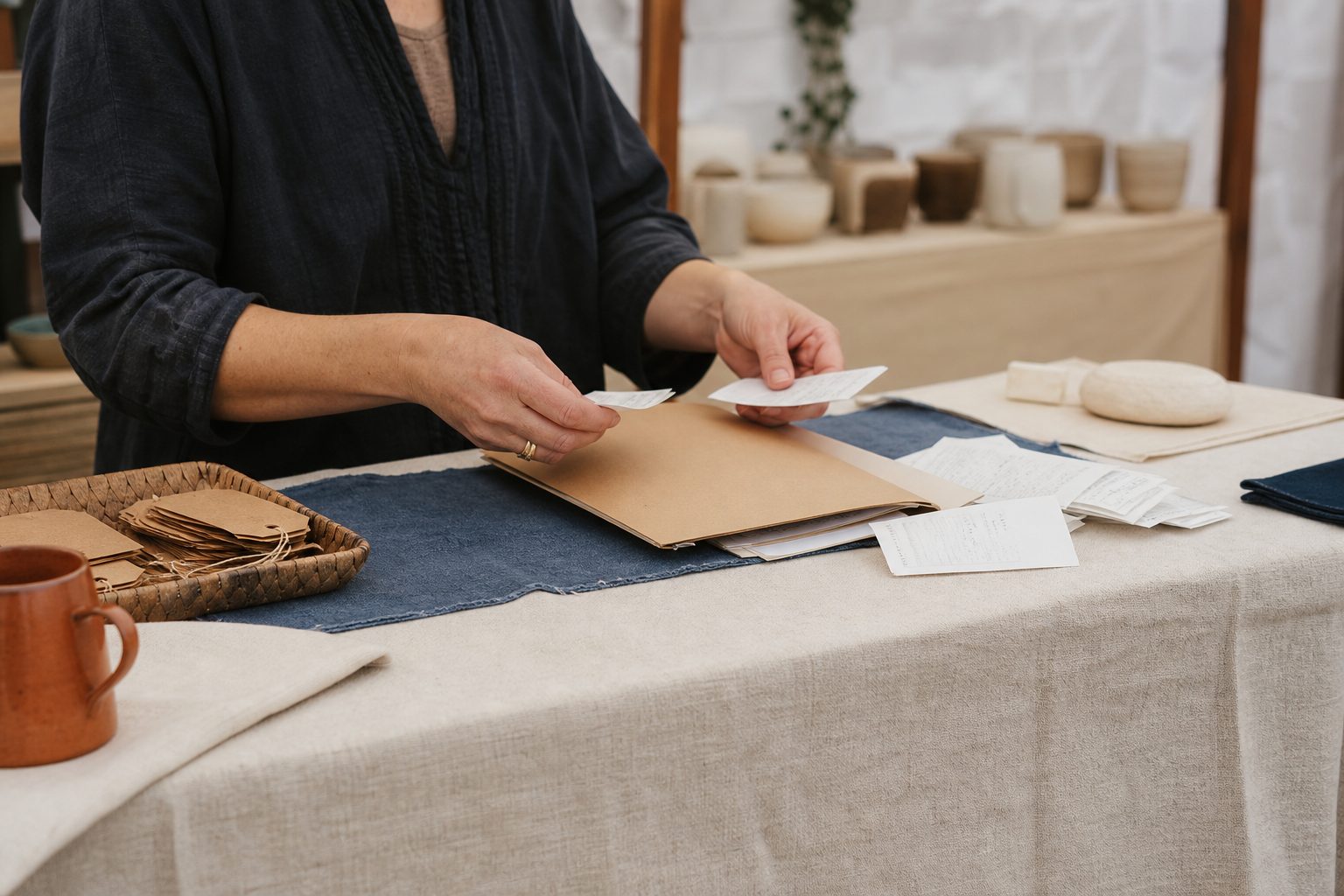
Maker's hands sorting show receipts and a permit folder on a linen covered booth table at a craft fair.

regulation and compliance

Sales Tax at Craft Fairs: Temporary Permits and Filing

Every state with a sales tax expects a collected rate at the booth. Here is how temporary seller permits, local rate lookup, and post show filing actually work for a traveling maker.

Booth and Bench

A notebook, pencil and coin bowl beside folded indigo cloth on an oat linen table in a market booth.

numbers and benchmarks

What a Craft Fair Booth Costs: Fees, Travel, and Break Even

Booth fee is the smallest line on most show budgets. Add jury fees, travel, lodging, staffing, card processing, and packaging, then work out the sales number that makes a weekend worth doing.

Booth and Bench

Read all nine reports in Booth and Bench

Tell us about your season

Bring your show calendar. We will count one market with you.

Send the details below and we will set up a walkthrough using your own lines, your own prices and the next fair on your calendar. Nothing generic, nothing pretend.

  • A 25 minute call, screen shared, at a time between shows
  • We load one of your product lines so you can see a real count
  • You leave with a break even figure for your next booth fee
  • No card details asked for during the walkthrough
Tell us what you make, how you count today, and the next fair on the calendar.

Answered inside one business day, and never on a Saturday while your tent is up. Rather skip the form? Mail the same details to jimenezjulien42@gmail.com and it reaches the same desk.