How each format screens applicants, from open call to slide jury
Most makers have filled out applications for at least two of the three major show types: juried art festivals, open craft fairs, and holiday markets. The way these events screen applicants shapes what gets sold, who attends, and how your booth fits the show.
Juried art festivals use a formal jury process. Applicants submit digital photos of their best work, often with descriptions and a short artist statement. A panel of jurors, usually artists, curators, or organizers, reviews these submissions, scores them, and selects a limited group for the event. The goal is to curate a consistently high level of craftsmanship and original design.
Open craft fairs typically have an easier entry. Some require only an online form and a few product photos. The organizers may do a light screening for fit or basic quality, but many events accept anyone who meets broad requirements, such as making their own products or holding liability insurance.
Holiday markets tend to be the least restrictive. Many accept vendors on a first-come, first-served basis, especially for short pop-up events. Some require only proof of product liability coverage or a local business license. These markets often have a mix of handmade, resale, and food booths.
Keep reading: Booth Layout Mistakes That Keep Shoppers Out of Your Tent
Application platforms and what a jury fee actually buys
The application process relies on several popular online platforms. For juried art festivals, shows often use third-party services that gather images, artist statements, and payment for jury fees. The most common platforms standardize requirements and streamline communication, but they do not guarantee acceptance.
A jury fee is a non-refundable cost charged to applicants for consideration by the show's selection panel. This fee pays for the administrative work of processing applications, compensating jurors, and sometimes upgrading the event's marketing. It is not applied to your booth fee, and paying it does not guarantee a spot.
Open craft fairs and holiday markets may use simpler sign-up forms, sometimes hosted on their own websites. Fees for these are lower, or sometimes not required at all. Where a fee is charged, it usually covers basic administrative time and is not tied to a formal review.
Applicants should know that a jury fee at an art festival means your work will be compared against other makers in your category. For shows with hundreds of applications and limited space, even strong work may be declined. For craft fairs and holiday markets, the risk of rejection is lower, but so is the potential for a curated, high-spending audience.
Booth fee models: flat rate, percentage of sales, or both
Booth fees range widely within and between show types, and the structure affects your take-home earnings.
Flat Rate Booth Fees
Juried art festivals almost always charge a flat booth fee. This covers your space, sometimes electricity or security, and basic event marketing. The amount depends on location, event reputation, and booth size. Urban festivals with large crowds charge more than rural or new shows.
Open craft fairs also favor flat rate fees, but these are usually less than for a juried festival. Some small or community-run fairs may charge just enough to cover venue rental and insurance.
Percentage of Sales (Commission)
Some shows, especially higher end art festivals, add a commission: a percentage of your sales collected at the end of the event. This is sometimes on top of a flat booth fee. The commission model is rarer at craft fairs and almost nonexistent at holiday markets.
Both Models Combined
A few large juried shows use both a flat fee and a commission, justifying higher costs with big crowds and strong buyer turnout. For new or occasional vendors, this can eat into profit margins. Holiday markets rarely use both; most are flat fee only.
Always ask what is included in the booth fee: power, wifi, chairs, parking, or tables. Some shows charge extra for every add-on. If a commission is collected, clarify whether it applies to gross sales or net after taxes and refunds.
Keep reading: Tracking One Product Line Across a Six Show Season
Who walks the aisle at each format and what they came to spend
The makeup of shoppers and their buying intent varies sharply between art festivals, craft fairs, and holiday markets.
Juried Art Festivals: The Intentional Shopper
Visitors to juried art festivals often plan their trip and expect to see fine art, high quality craft, and original designs. Shoppers may have a budget for larger purchases, such as wall art, jewelry, or furniture. Many are collectors, repeat attendees, or gift buyers looking for one-of-a-kind pieces.
Average sale values tend to be higher, and customers ask questions about materials, techniques, and the artist's background. Shows in affluent areas or with a long history attract buyers who do not hesitate at higher price points.
Open Craft Fairs: The Browsing Crowd
Craft fair shoppers are a mix of locals, families, students, and casual browsers. The event may be part of a street festival, market day, or community gathering. Many come to enjoy the atmosphere, see friends, or find small gifts. Low to mid-range price points move fastest.
Impulse buys dominate sales. Items that are easy to carry, practical, or make good gifts, such as candles, mugs, hats, and prints, do well. Shoppers may be price sensitive and compare booths.
Holiday Markets: Seasonal, Last-Minute Buyers
Holiday market crowds often come ready to buy, but the focus is on seasonal gifts, home decor, and treats. Many buyers are looking for affordable, ready-to-wrap items. Sales volume can be high, but average ticket size is usually lower than at juried festivals.
Many shoppers are making multiple small purchases, and the mix of handmade and resale booths means some competition on price and uniqueness. Crowds peak on weekends and in the last days before a holiday.
Indoor halls, outdoor lots, and what the venue does to your setup
The physical setting of an event changes everything from booth design to inventory planning.
Indoor Venues
Juried art festivals and some craft fairs use convention centers, school gyms, or community halls. Indoors means protection from weather, stable lighting, and often access to electricity. Booth spaces are marked on floors, and height restrictions may apply. Load-in and load-out is easier, but parking can be a challenge.
Indoor shows allow for more delicate displays, framed art, and products that could be damaged by rain or wind. Sound levels are lower, and climate control helps with visitor comfort.
Outdoor Venues
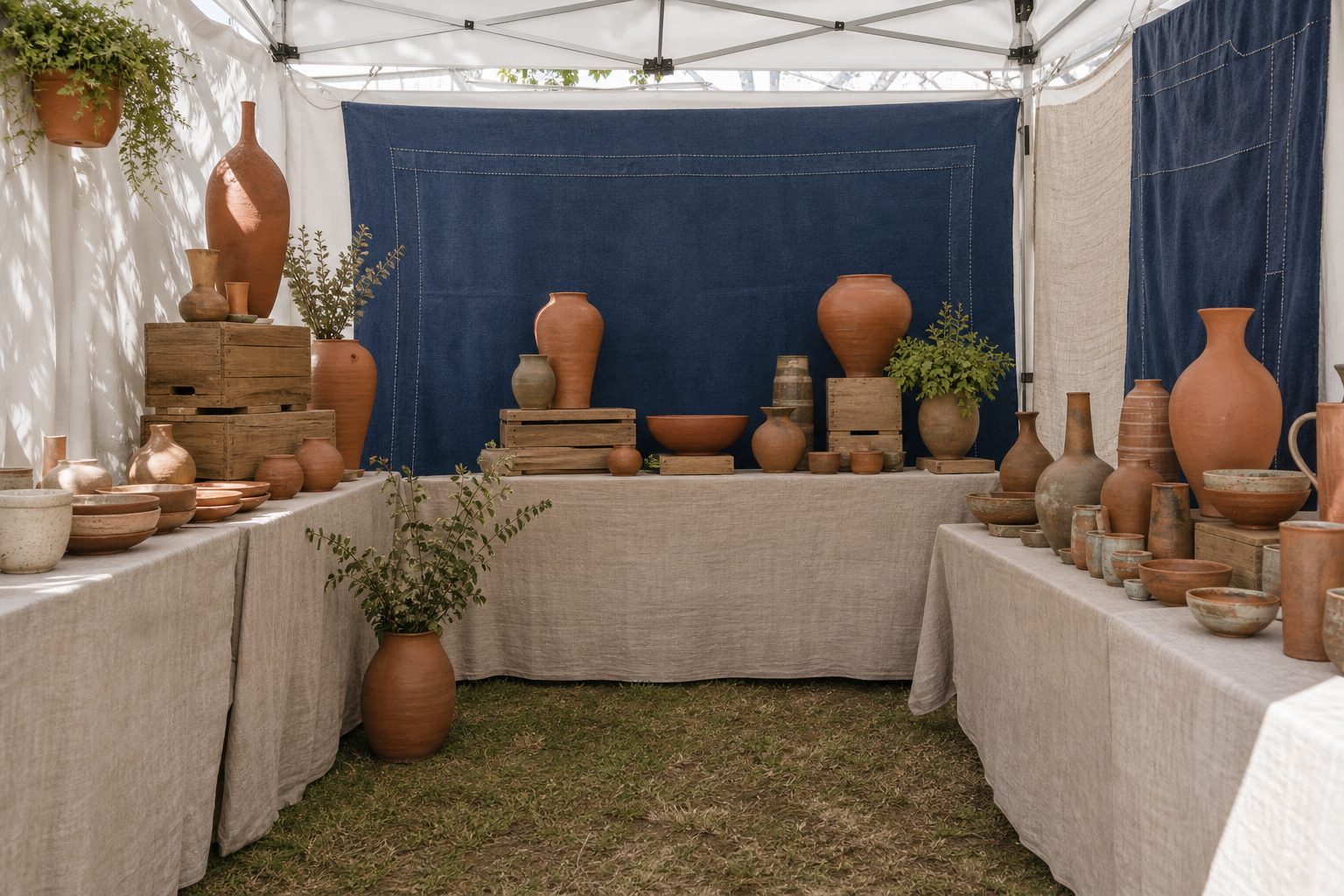
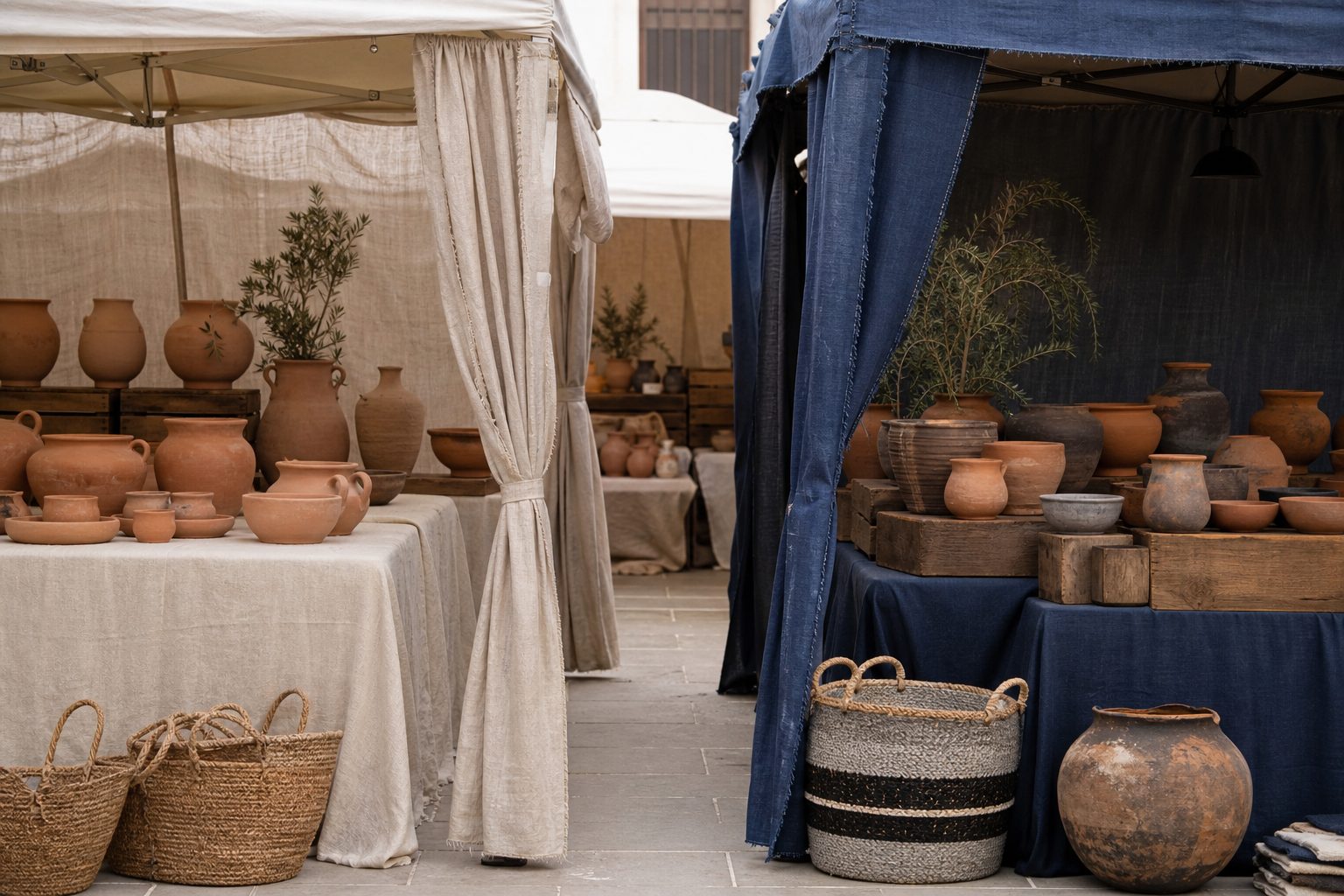
Many art festivals and most open craft fairs are held outdoors: in parks, on city blocks, or in parking lots. Vendors must bring tents, weights, and weatherproof displays. Setup time is longer, with early morning arrivals and late breakdowns.
Weather is the biggest risk. Wind, rain, and sun can affect both crowds and your products. Some shows provide basic shelter or tent rentals, but most require you to bring your own. Outdoor setups need more signage and weather-resistant packaging.
Holiday Markets
Holiday markets may be indoors or outdoors, depending on region and tradition. Some are in historic buildings, barns, or heated tents. Outdoor winter markets require planning for cold, snow, and low light. Battery-powered lighting and portable heaters may be allowed, but always confirm with organizers.
See how BoothInventory handles this for craft and maker commerce
Handmade only rules and how organizers enforce them
Each event format enforces the definition of handmade in its own way.
Strict Handmade Enforcement
Juried art festivals have the tightest rules. Most allow only original work created by the applicant. Mass-produced items, imports, and buy-sell products are not permitted. Organizers may require process photos, studio visits, or signed statements verifying authorship. At the event, staff check booths for compliance, and violations can result in removal.
Moderate to Loose Rules
Open craft fairs vary. Many require that at least some portion of each item is handmade or designed by the seller. Some allow kits, upcycled goods, or limited outsourcing. Enforcement is usually less formal: a quick booth check or a review of submitted photos. Complaints from other vendors sometimes trigger closer scrutiny.
Holiday Markets: Variety Allowed
Holiday markets are often the most relaxed. Many accept handmade, vintage, and some resale or imported items, especially if the market is short or open to food vendors. Some organizers specify a percentage of handmade products per booth, while others focus on variety to attract larger crowds.
Before applying, always read the rules and be ready to document your process if challenged. Enforcement varies, but unhappy vendors and customers notice if the rules are not followed.
Choosing a format when you are testing a new product line
Launching a new product line calls for careful event selection. Each format offers different risks and feedback opportunities.
Juried art festivals are high stakes. The application process is competitive, and booth fees are higher. If your new line aligns with fine art or high-end craft, and you already have a brand following, a juried event can provide valuable exposure and detailed feedback from seasoned buyers. However, the investment is significant, and acceptance is not guaranteed.
Open craft fairs are the preferred testing ground for most makers. Lower fees, less pressure, and a broad shopper base make these events ideal for gauging demand, experimenting with pricing, and refining your display. You can adjust your inventory between weekends and get honest reactions from a range of shoppers.
Holiday markets are best for seasonal or gift-oriented product lines. The crowds are primed to buy, but competition is fierce, and trends shift quickly. If your new product is geared toward the holidays or impulse gifting, these markets can validate your design and price point over just a few days.
No matter the format, event-to-event tracking is essential when testing new products. Keeping track of which items sold, which needed restocking, and how each show performed helps you make informed decisions. Many makers now use inventory and sales tracking tools that break down results by event, generate restock lists, and compare profitability. This kind of data lets you focus your efforts on the formats that move your best work.